
With China, It’s Getting Late Early
What Americans Are Suddenly Seeing From Trump’s Beijing Trip — And What I Saw Touring China’s Advanced Industries

Sometimes it is what reporters say on the side that matters most.
Over the past several days, journalists arriving in Beijing to cover the Trump-Xi summit have sounded almost startled by what they are seeing. Across networks ranging from CNN to Fox, reporters who had not visited China in years kept making the same observation: the country looks dramatically more advanced than they remembered.
Seas of sleek electric vehicles. High-speed rail everywhere. Vast new construction. Digital systems integrated into daily life on a scale difficult to find in most American cities.
Again and again, the same reaction appeared underneath the reporting:
“I had no idea.”
This is not noise.
It is signal.
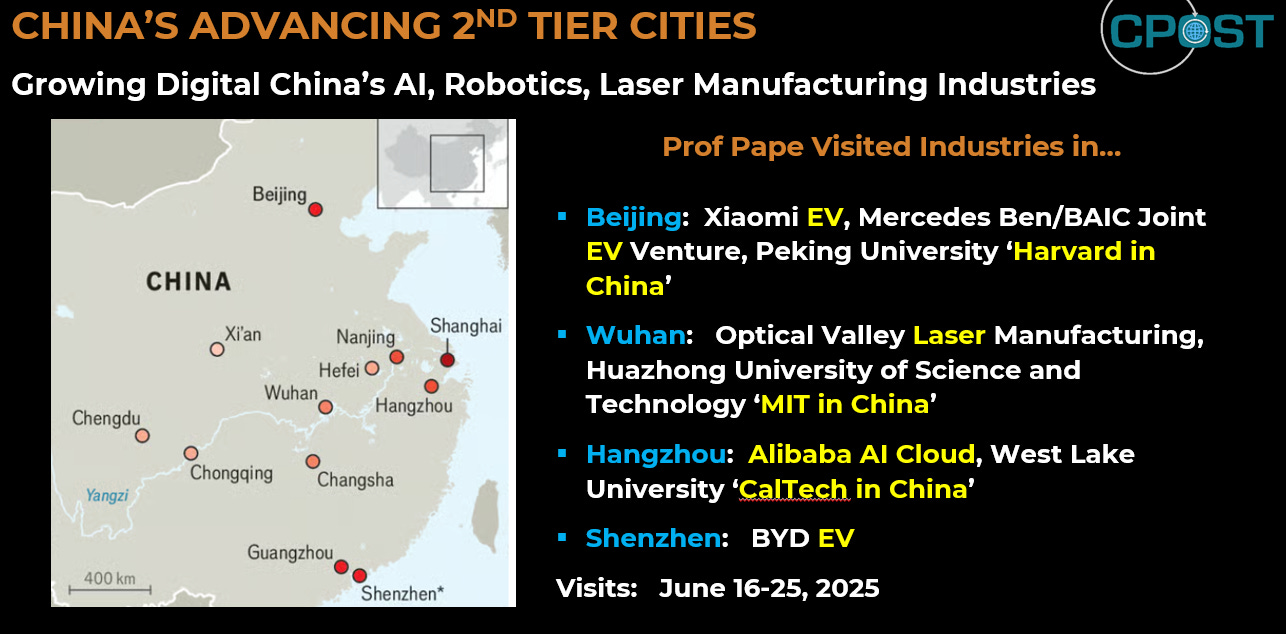
Last summer, I spent two weeks touring China’s advanced industrial centers — Wuhan, Hangzhou, Shenzhen, Beijing, and several next-generation manufacturing facilities tied to robotics, artificial intelligence, advanced optics, semiconductors, and electric vehicles. I went because I wanted to see for myself whether the dominant American narrative about China still matched reality.
I came away convinced that much of Washington is debating the wrong problem.
The issue is no longer simply whether China manufactures goods more cheaply than the United States.
The issue is whether China is beginning to organize innovation itself more effectively than the United States.
1. China Is Building Advanced Ecosystems, Not Just Factories
For years, Americans viewed China through the framework of cheap labor and mass exports. That model helped drive China’s rise. But it no longer explains what is happening now.
What I saw was something far more ambitious: a country attempting to integrate universities, AI, robotics, energy systems, software, logistics, and manufacturing into unified industrial ecosystems.
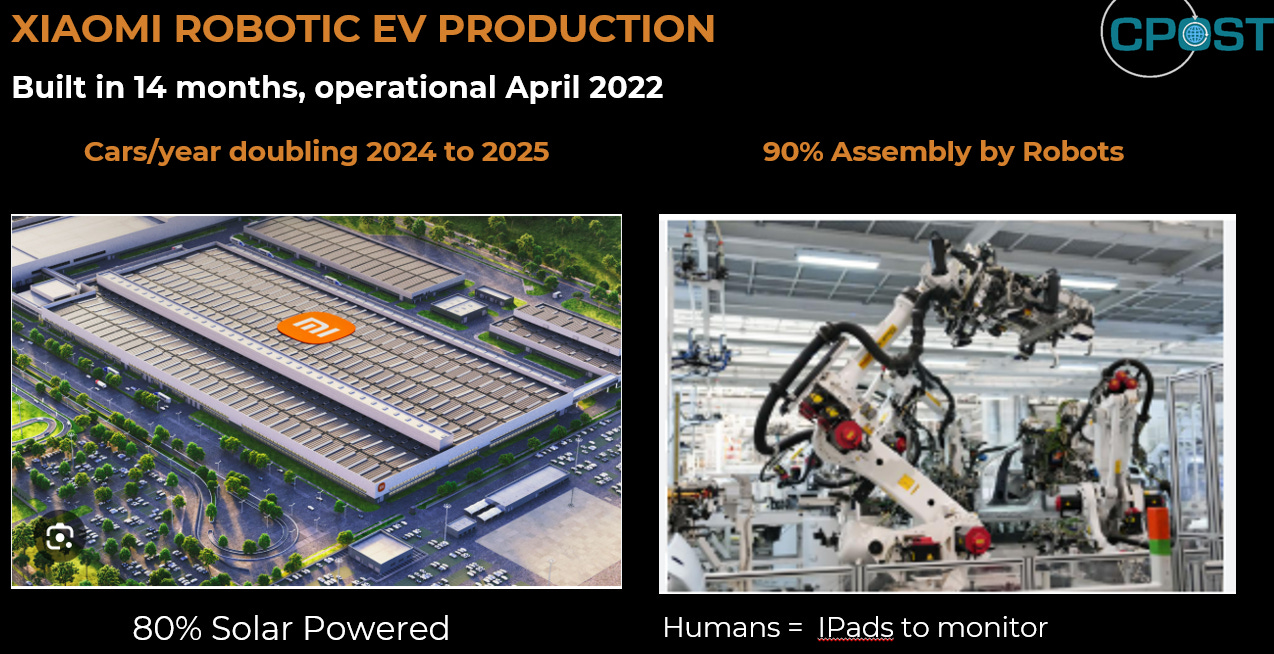
At a Xiaomi electric vehicle facility outside Beijing, the production line barely resembled a traditional factory. Robots dominated the assembly process. Human workers mostly monitored systems through tablets and control stations. Executives told me the plant could produce one vehicle every 67 seconds.
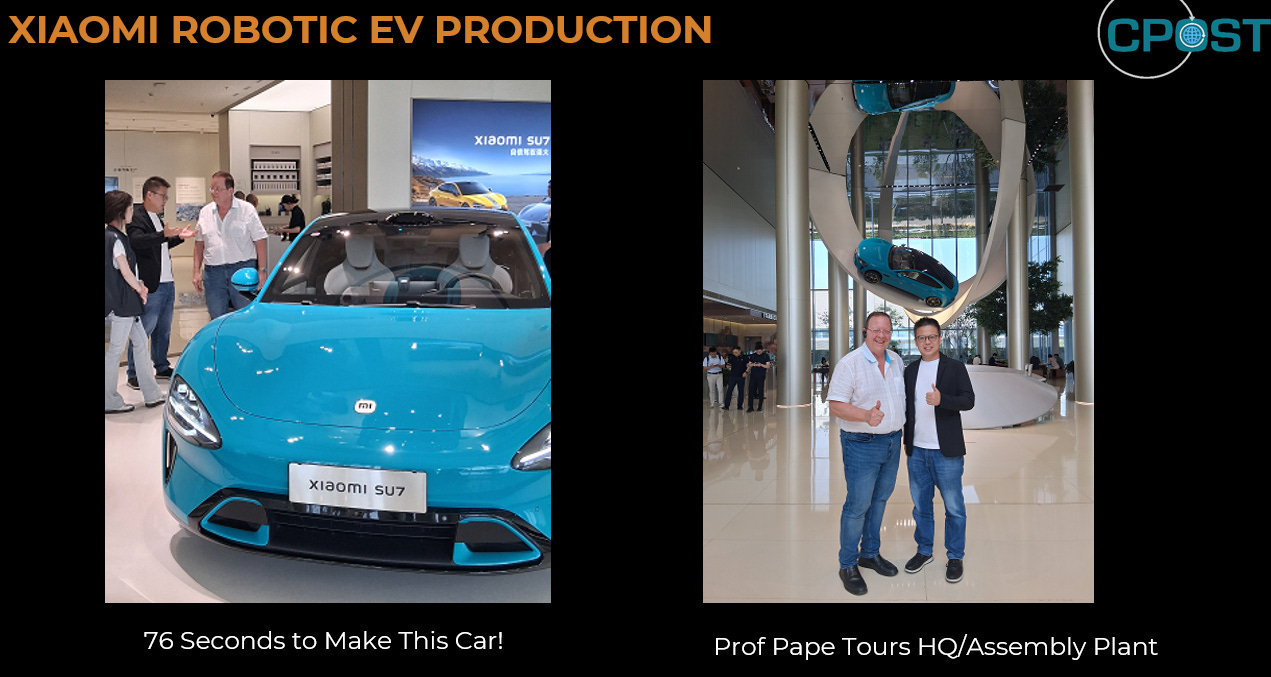
I have toured industrial facilities – and in China in 1979 with 30 economists-- before. I did not leave Xiaomi thinking China was merely catching up. I left wondering whether, in some critical industries, the United States is no longer setting the pace at all.
The significance was not simply automation.
It was integration.
Battery systems, charging infrastructure, software architecture, logistics networks, and energy supply were all being developed simultaneously inside the same industrial ecosystem. Much of the factory’s electricity came from large-scale solar installations designed to support anticipated future AI and transportation demand.
This is not just manufacturing.
It is system-building.
2. The Most Important Transformation Is Happening Outside Beijing
What surprised me most was where much of this transformation is occurring.
Americans often compare Beijing to Silicon Valley or Shanghai to New York. Increasingly, those comparisons miss the real story. China’s industrial transformation is spreading through second-tier cities.
Wuhan is the clearest example.
Americans associate Wuhan primarily with COVID. What I found instead was a rapidly advancing center for industrial lasers, advanced optics, semiconductor-linked manufacturing, robotics, and university-driven research ecosystems.
The comparison that kept occurring to me was not Wuhan versus San Francisco.
It was Wuhan versus Pittsburgh.
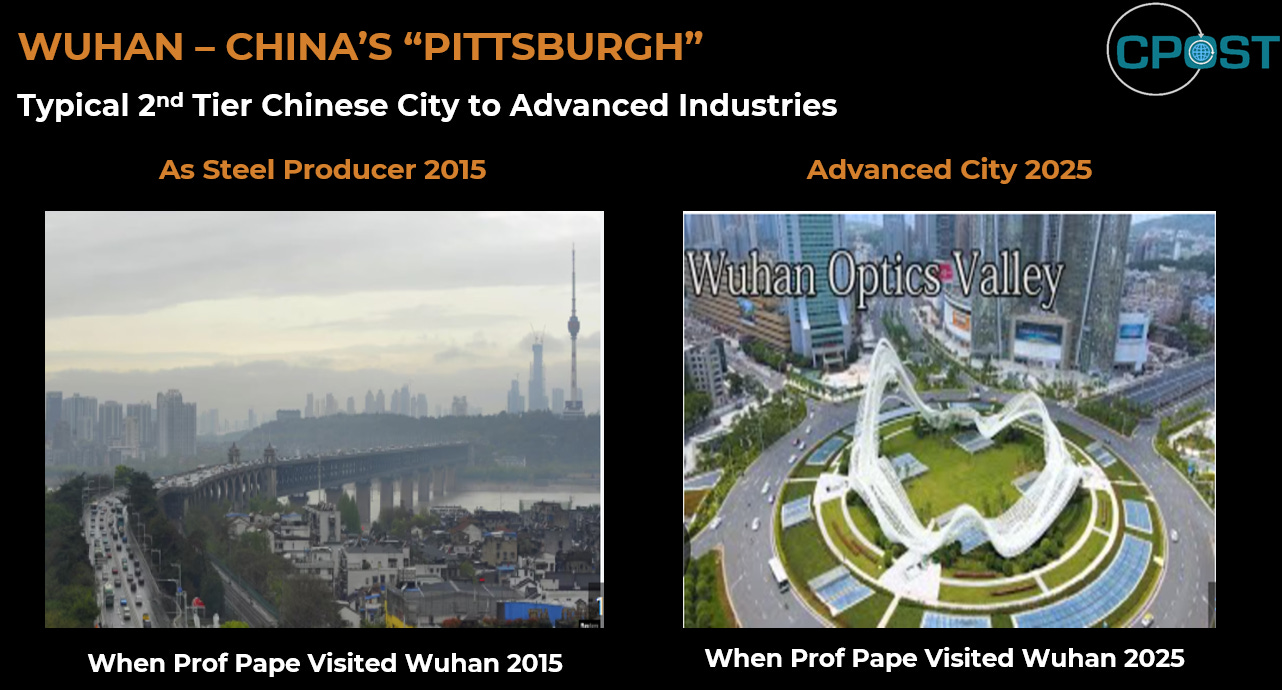
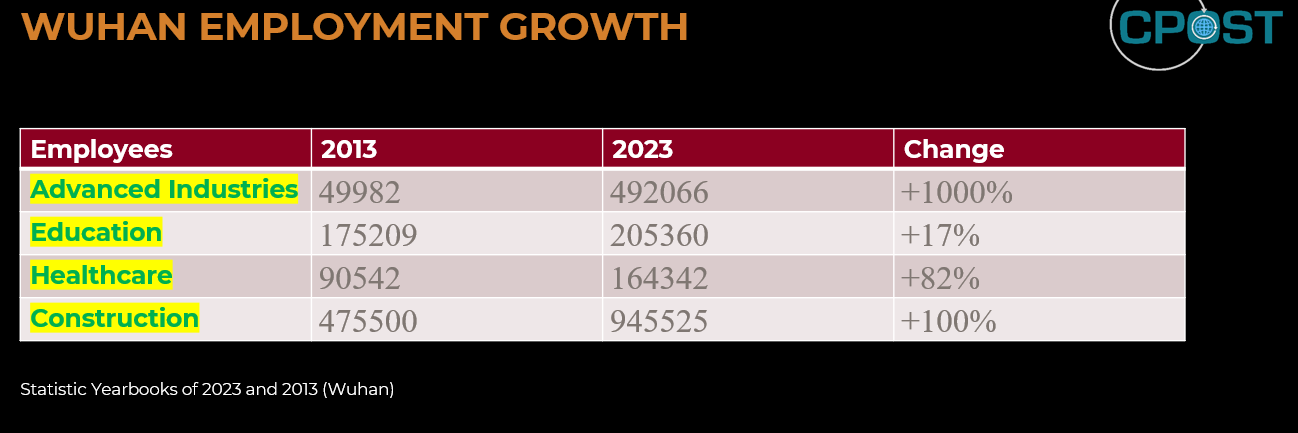
That was the moment the scale of the problem became clear to me. China is not simply building advanced industries in Beijing and Shanghai. It is rebuilding its equivalent of the American industrial heartland around the technologies likely to dominate the next fifty years.
That distinction matters because America’s long-term weakness increasingly lies outside its elite coastal innovation hubs. Silicon Valley remains extraordinary. Boston remains extraordinary. But much of America’s former industrial base has stagnated for decades.
China appears to understand this problem far better than we do.
Again and again, I encountered what I began calling the “Wuhan model”: universities connected directly to nearby industrial clusters, local governments competing to attract advanced production systems, and infrastructure built around anticipated technological growth rather than present demand alone.
3. Why This Matters for American Power
Many Americans still treat China primarily as a military problem.
That gets the causality backwards.
Military power ultimately rests on industrial power. Industrial power increasingly rests on the ability to organize innovation at scale over long periods of time.
That is the deeper strategic issue now emerging.
What I repeatedly heard from executives and local officials was not fear about surviving American tariffs. Their planning horizon stretched decades into the future. Many openly discussed Asia — not the United States — as the primary market shaping their long-term strategy.
That is a major shift.
China is no longer organizing itself primarily around access to the American consumer.
It is organizing itself around technological leadership inside the world’s fastest-growing region.
4. America’s Debate Is Still Too Small
This is why America’s current debate about tariffs increasingly feels incomplete.
Tariffs may slow portions of Chinese export growth. They may temporarily protect selected industries. But tariffs alone do not solve the underlying strategic problem.
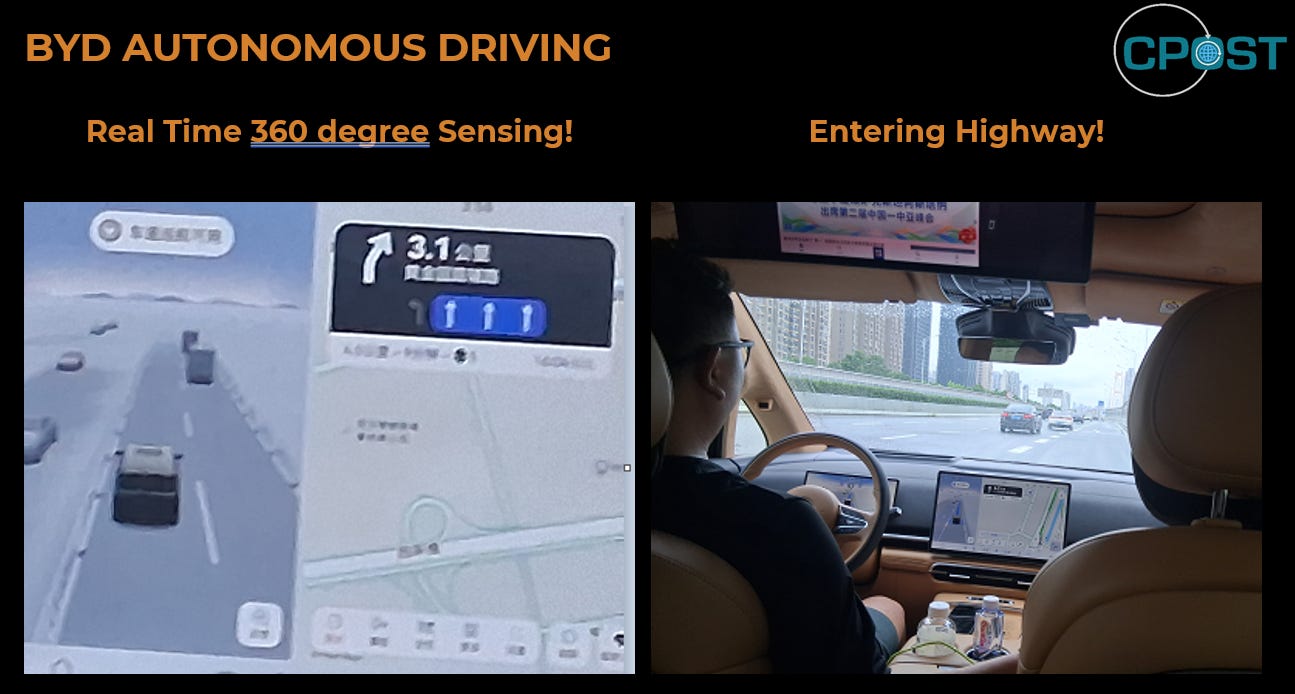
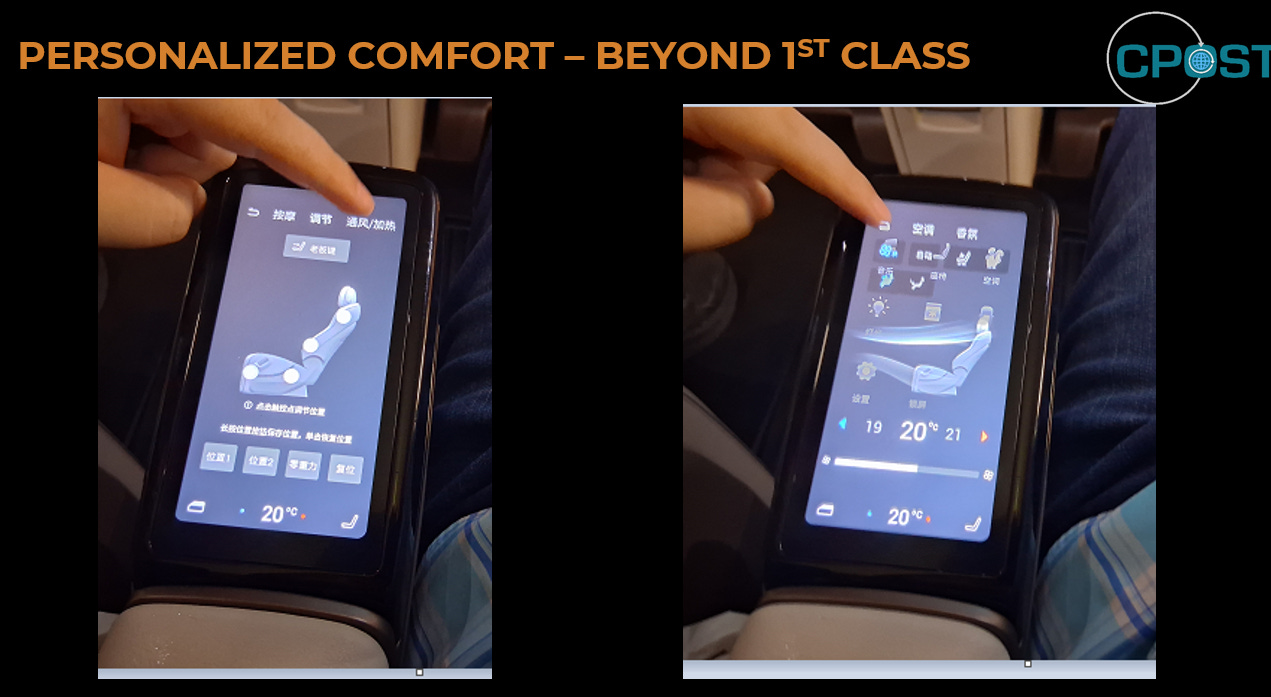
The deeper issue is that large parts of the United States no longer possess coherent systems connecting manufacturing, workforce development, infrastructure, universities, energy expansion, and technological scaling.
China increasingly does.

That does not mean China is destined to dominate the century. China faces serious structural problems: debt, demographics, political centralization, and real-estate instability among them.
But Americans increasingly make the opposite mistake from the one they made twenty years ago. Then, many underestimated China. Today, many dismiss Chinese advances because they assume China’s internal problems automatically prevent technological leadership.
History does not work that way.
Great powers often continue generating major industrial breakthroughs even while facing severe internal tensions.
5. It’s Getting Late Early
Yogi Berra once famously said: “It gets late early out there.”
That is where the United States now finds itself.
For decades after the Cold War, American leaders assumed technological primacy would naturally remain ours. What I saw in China suggested something very different: a society mobilizing enormous resources toward the next industrial era while much of America still debates whether the challenge is even real.
For years, many Americans assumed our technological lead was permanent because we invented the modern digital age. What I saw in China forced a harder question: what happens if another great power becomes better at scaling the next industrial revolution than we are?
The future is not arriving someday.
In important sectors of China, it is already here.
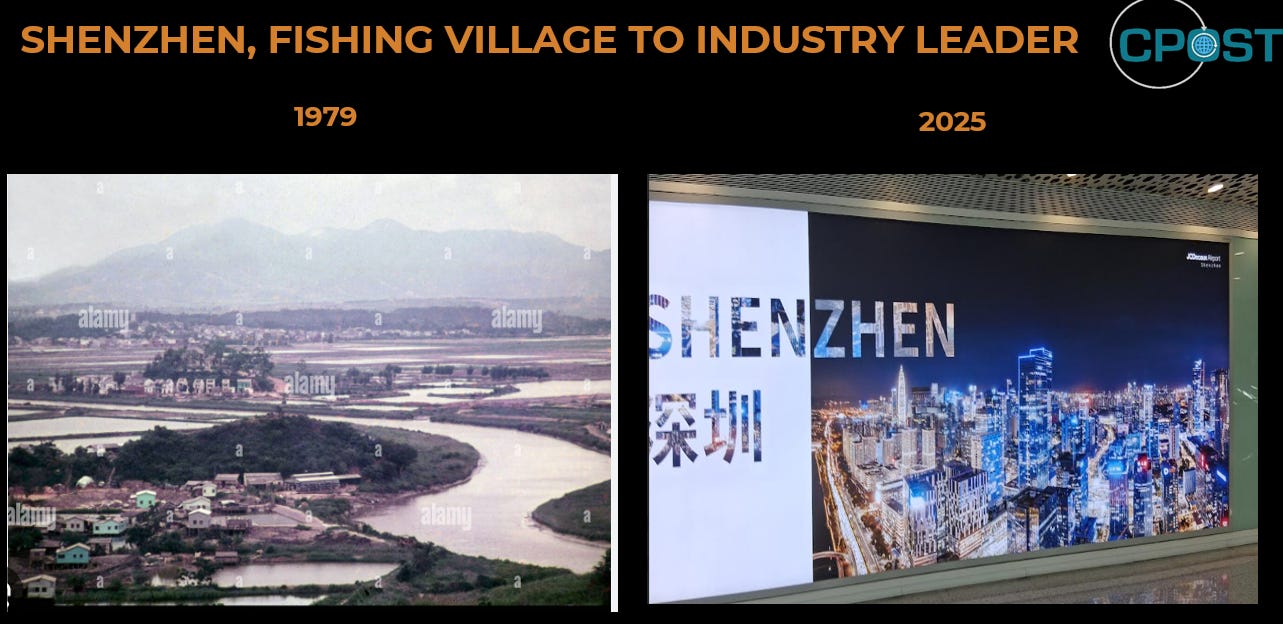
Imagine China’s advanced industrial cities 10 years from now — in 2035.
The real question: Where will America’s cities be?
If this analysis helped clarify what is actually changing inside China, send it to someone still thinking about U.S.-China competition primarily through tariffs, trade deficits, or Taiwan alone. The deeper story is now advanced industrial regional growth.
Over the next several weeks, I will be writing more about what I saw inside China’s advanced industries, what it means for American power, and why much of Washington still misunderstands the scale of the challenge. If you want those deeper analyses, consider subscribing.
Today's story is that China is leaving us behind in terms of infrastructure and technological integration, tomorrow's is that China leapfrogs us in technological advancement, imo. Anti-immigrant sentiment leading to brain drain, anti-science sentiment leading to degradation of universities and scientific organizations, slower STEM graduate growth in percent and absolute terms - multiple trends need to reverse, otherwise it's a simple numbers game that says China wins.
I'm not saying this to be defeatist or pro-Chinese, btw. Americans need to wake up and realize things have to change.
I think what matters here is not whether one “likes” China, or thinks communism is good, or wants to wave little flags for the CCP, which seems to me a rather dramatic misunderstanding of the point. The question is not moral admiration. The question is strategic reality.
What Prof. Pape seems to be describing is not simply that China has some impressive factories or shiny trains, but that China is building systems: universities connected to industry, manufacturing connected to energy, cities connected to logistics, AI connected to robotics, and infrastructure connected to a long-term national story about what the country is trying to become. Meanwhile, we are over here arguing about tariffs, immigrants, bathrooms, “wokeness,” revenge politics, and whatever fresh spectacle is being lowered into the national cage for us to chew on this week.
That does not make China good. It does not make authoritarianism wise. It does not erase China’s poverty, repression, demographic problems, debt, or brutality. But it may mean that while we have been preoccupied with grievance and spectacle, they have been building the material and organizational base of future power. And that, to me, is the real warning. Empire does not usually notice its hollowing out in real time. It tells itself stories about its exceptional destiny while the machinery rusts, the schools weaken, the bridges crack, the factories leave, the public sphere rots, and the people are taught to blame one another for the loss.
So no, I do not read this as “Rah Rah China.” I read it as: perhaps we should stop assuming that American primacy is a natural law. Military power rests on industrial power. Industrial power rests on education, infrastructure, energy, social trust, and the ability to organize the future. If we keep cannibalizing those things while congratulating ourselves for being free, then freedom itself becomes a slogan painted on the empty warehouse wall.