
The Damage You Can’t Hide
Why the Iran War Is Quietly Reshaping American Power in the Gulf

The headlines this week focused on Donald Trump’s summit with Xi Jinping in Beijing. Cameras followed the choreography. Analysts parsed the body language. Commentators debated tariffs, Taiwan, and great-power diplomacy.
But after the summit ends, something else will matter far more.
The new bomb damage assessments emerging from the Iran war.
Over the past several days, satellite imagery, leaked intelligence assessments, and independent reporting have begun revealing the extent of Iranian missile and drone strikes on American and Gulf infrastructure during the conflict. The images matter because they reveal something deeper than battlefield destruction.
They reveal the widening gap between tactical success and strategic success.
The United States demonstrated it could repeatedly strike Iran from the air. But Iran demonstrated something equally important: it could impose meaningful military and political costs on the American position in the Gulf without closing the Strait of Hormuz, without invading neighboring states, and without defeating the United States militarily in any conventional sense.
That distinction may become one of the defining strategic lessons of the war.
1. Tactical US Victory, Strategic Iranian Success
The Trump administration continues emphasizing successful bombing operations against Iranian facilities. In narrow operational terms, many of those strikes worked.
Targets were hit. Infrastructure was damaged. Iranian assets were destroyed.
But strategy is not simply about whether bombs land.
Strategy is about whether force produces durable political outcomes.
The new assessments suggest Iran retained substantial missile and drone capability even after weeks of strikes. American officials now privately acknowledge that Iranian systems proved more survivable, more geographically dispersed, and more rapidly reconstituted than many prewar assumptions anticipated.
That matters enormously.
Because if Iran can continue threatening American bases, logistics hubs, energy infrastructure, and naval operations after repeated U.S. air campaigns, then short bursts of bombing are unlikely to produce decisive strategic outcomes.
Instead, they produce the exact dynamic I have described for months as the Escalation Trap: each round of coercion increases pressure for further escalation because neither side achieves durable strategic resolution.
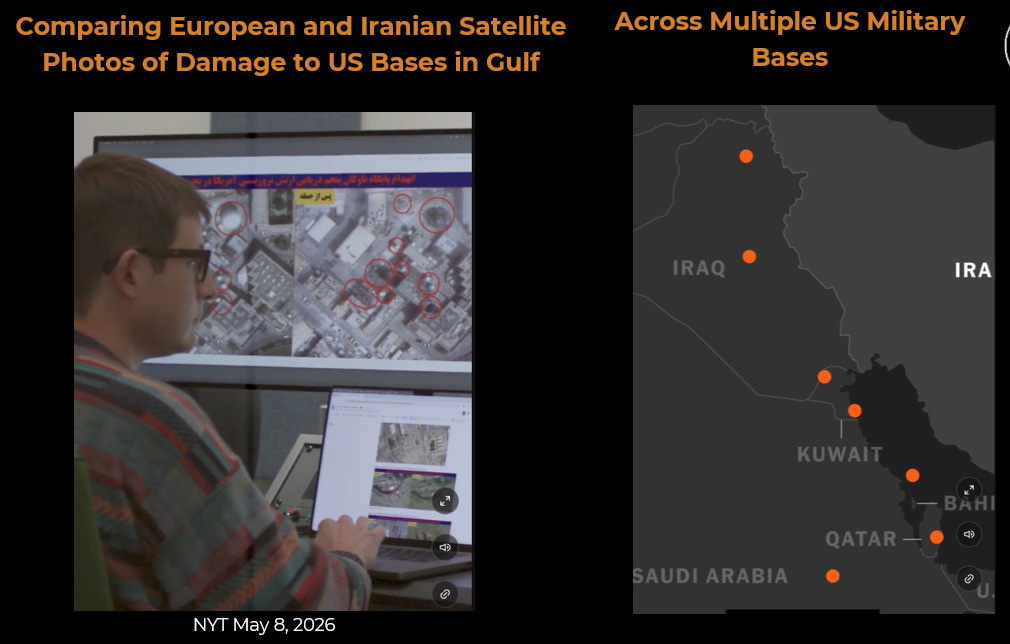
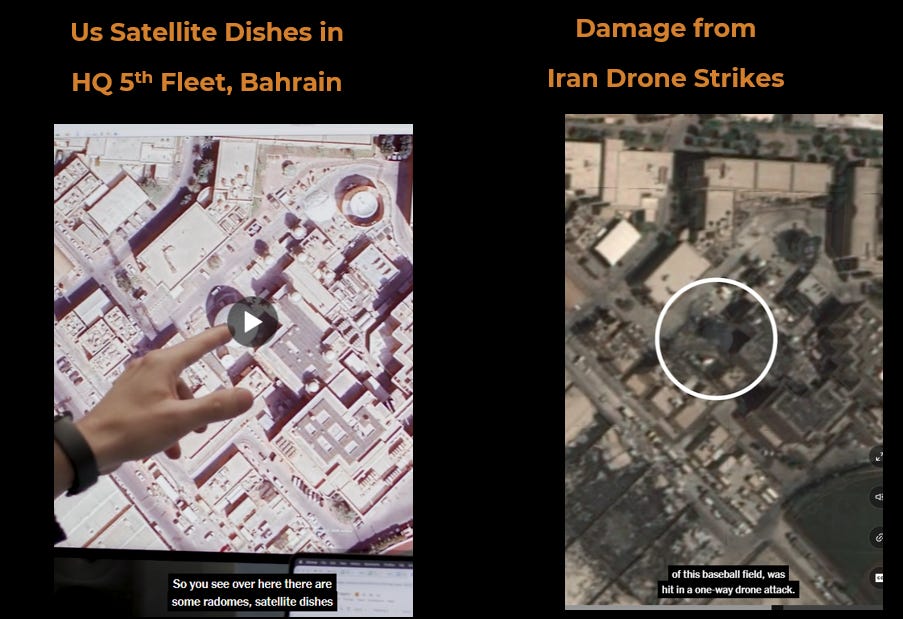
The operational story is no longer simply whether the United States can bomb Iran.
Of course it can.
The strategic question is whether bombing alone can restore uncontested American dominance inside the Gulf system.
The emerging evidence increasingly suggests the answer is no.
For thirty years, American power in the Gulf rested partly on perception: that no regional state could seriously challenge U.S. military dominance for long.
The Iran war may become the conflict that shattered that perception.
And once perceptions of dominance crack, allies hedge, rivals probe, and deterrence starts becoming more expensive to maintain everywhere else.
2. The Geography of Fear
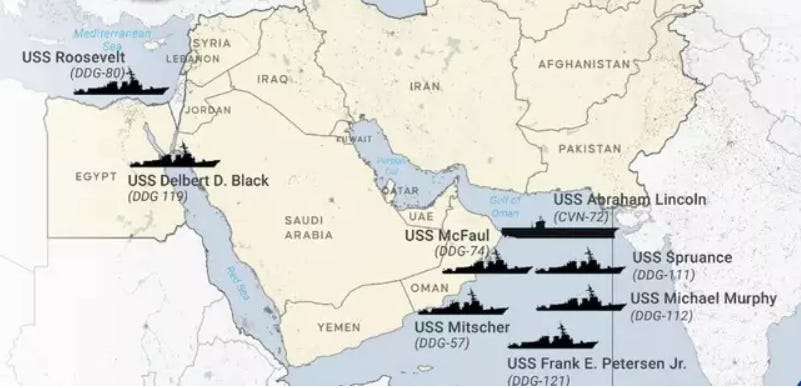
One of the least discussed outcomes of the war is what happened to American naval positioning.
Major U.S. naval assets are now operating significantly farther from the Iranian coastline than many planners once assumed would be necessary during a regional conflict.
That movement itself is a strategic signal.
Iran’s expanding missile and drone envelope has effectively pushed portions of American power projection farther away from the battlespace. The issue is not whether the U.S. Navy remains extraordinarily powerful overall. It does.
The issue is that area denial works even without battlefield victory.
Iran does not need to sink an aircraft carrier to alter American operational behavior. It only needs to create sufficient uncertainty and risk to complicate sustained proximity operations.
That is the larger military lesson now being studied around the world.
Relatively weaker regional powers armed with precision missiles, drones, hardened infrastructure, and dispersed launch systems may increasingly be able to blunt portions of American intervention advantages without defeating the United States outright.
That is a profound strategic shift.
What makes this moment so dangerous is that much of official Washington still appears psychologically unprepared for it.
American elites from both parties spent thirty years assuming precision airpower and naval supremacy could reliably dominate regional adversaries at acceptable cost.
The Iran war is becoming the first major conflict forcing policymakers to confront the possibility that this assumption no longer fully holds.
And Iran has proven far more capable of imposing risk than Washington expected before the war began.
3. Gulf Allies Are Quietly Recalculating
The political effects are now spreading across the Gulf.
For decades, Gulf monarchies operated under a basic assumption: whatever happened regionally, the United States would ultimately dominate escalation.
That assumption no longer appears as secure as it once did.
Saudi Arabia, the UAE, Qatar, and other regional partners watched Iranian missiles penetrate sophisticated defenses, disrupt infrastructure, and force prolonged American force-protection measures across multiple bases.
Just as important, they watched Washington struggle to produce a clear endgame.
This is how perceptions of power change in international politics.
Not suddenly-- Gradually.
Allies begin hedging. Regional actors reduce dependence. Rivals probe more aggressively. Strategic uncertainty spreads faster than battlefield outcomes alone would suggest.
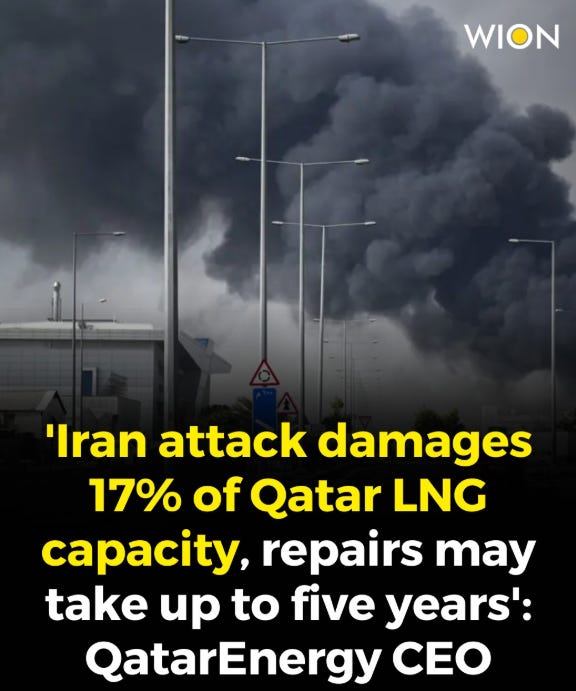
That helps explain why several Gulf states have become increasingly cautious about facilitating expanded American operations against Iran. They understand something fundamental: geography does not change.
Iran will remain their neighbor long after American carrier groups rotate home.
4. Robert Kagan’s Dilemma — and the Logic of Escalation
One of the most revealing developments of the past week has come not from critics of the war, but from one of the intellectual architects of modern American interventionism itself.
In a striking Atlantic essay titled “Checkmate in Iran,” Robert Kagan argued that the United States may already have suffered what he called a strategic defeat “that can neither be repaired nor ignored.” He warned that “there will be no return to the status quo ante” and acknowledged that Iran had fundamentally altered the regional balance despite weeks of devastating American and Israeli strikes.
That assessment matters because it amounts to a delayed recognition of the very structural problem many of us warned about before the war began.
For months, I argued that limited bombing campaigns against Iran were unlikely to produce decisive political outcomes because Iran’s dispersed missile systems, denial capabilities, and regional leverage made durable coercion extraordinarily difficult. The danger was never simply failed airstrikes.
The danger was that tactical frustration would generate pressure for broader escalation.
Kagan is now implicitly acknowledging the first half of that mechanism.
But his conclusion points toward more escalation.
Once policymakers accept that tactical military success has failed to produce strategic resolution, pressure grows inside Washington for expanded escalation. If short bombing campaigns fail, advocates demand longer campaigns. If airpower alone proves insufficient, pressure shifts toward broader targeting, expanded regional operations, cyber escalation, maritime confrontation, or eventually some form of ground commitment tied to securing missile sites or nuclear infrastructure.
That is the “trap” in the Escalation Trap.
The logic of coercion begins consuming the logic of restraint.
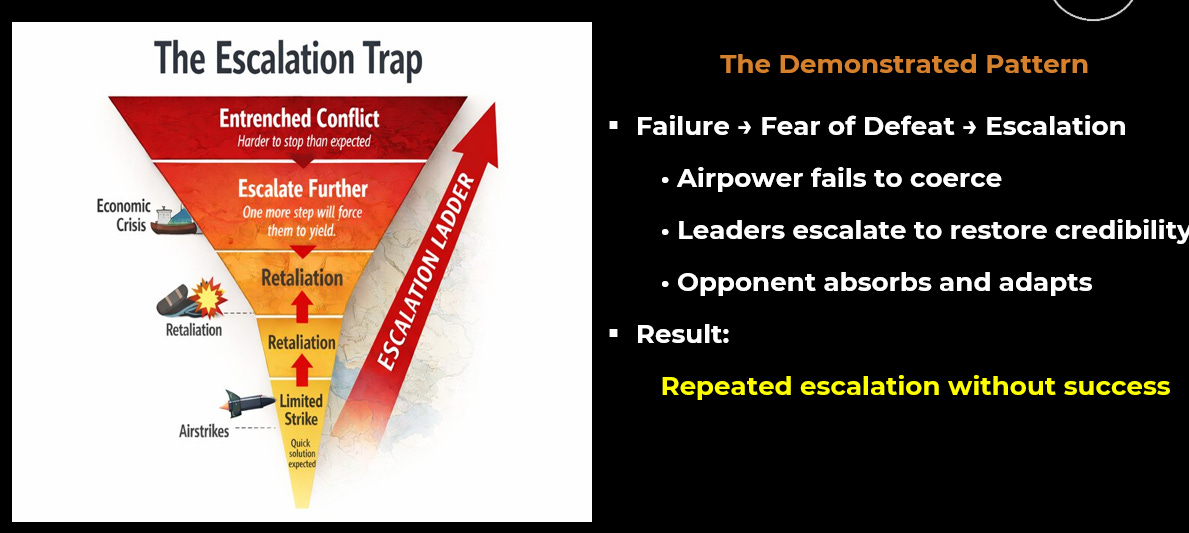
This is not speculative theory. It is the recurring historical pattern visible from Vietnam to Iraq: military force fails to produce decisive political outcomes quickly, policymakers interpret the failure not as a limitation of coercion itself but as evidence that insufficient force was used, and escalation becomes self-reinforcing.
What makes the current moment so important is that even prominent advocates of intervention are beginning to concede the underlying strategic reality.
The debate in Washington is no longer really about whether the war succeeded.
It is increasingly about whether the establishment in Washington is prepared to escalate further simply to avoid acknowledging that limited coercion failed to restore the old regional balance. (More on this in future posts).
5. The Strategic Balance Is Already Changing
The most important result of the Iran war may not be territorial change or regime collapse.
It may be the gradual erosion of assumptions surrounding American dominance itself.
The war is increasingly being interpreted internationally not as an isolated Middle East conflict, but as evidence that even the world’s most powerful military faces growing constraints against determined regional powers armed with precision missiles, drones, and layered denial systems.
That is why the bomb damage assessments matter so much.
They are not merely technical evaluations of destroyed structures.
They are early indicators of a changing strategic era.
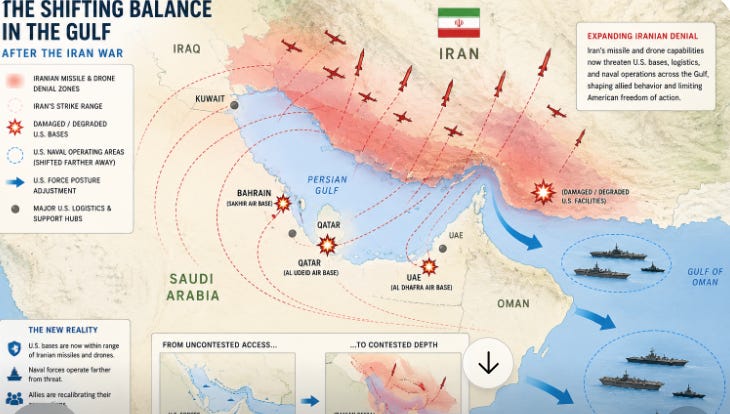
Military planners in Beijing, Moscow, and capitals across the developing world are studying these bomb damage assessments carefully.
Because the question now is no longer whether the United States can destroy targets.
The question is whether even overwhelming American military power still reliably translates into political control.
The deeper issue is no longer whether the United States can punish adversaries militarily.
The deeper issue is whether punishment alone still produces political control.
That is the strategic question now hanging over the Gulf.
And increasingly, over American power itself.
That is why the Iran war is no longer just a Middle East story.
It is becoming a story about the future limits of American power in the twenty-first century.
If you found this analysis useful, please consider sharing it with others trying to understand how the Iran war is reshaping not only the Middle East, but the future balance of global power itself.
— Robert Pape
Please go on the DarkHorse Podcast :)
Just came across this story in the FT, tegarding Saudi non-aggression pact proposal which apparently has widespread support among many states in West Asia, and even some in Europe, with the exception of Israel and the UAE.
https://www.ft.com/content/ab78e60e-7a41-4943-a1a5-bd60b4ca31b9